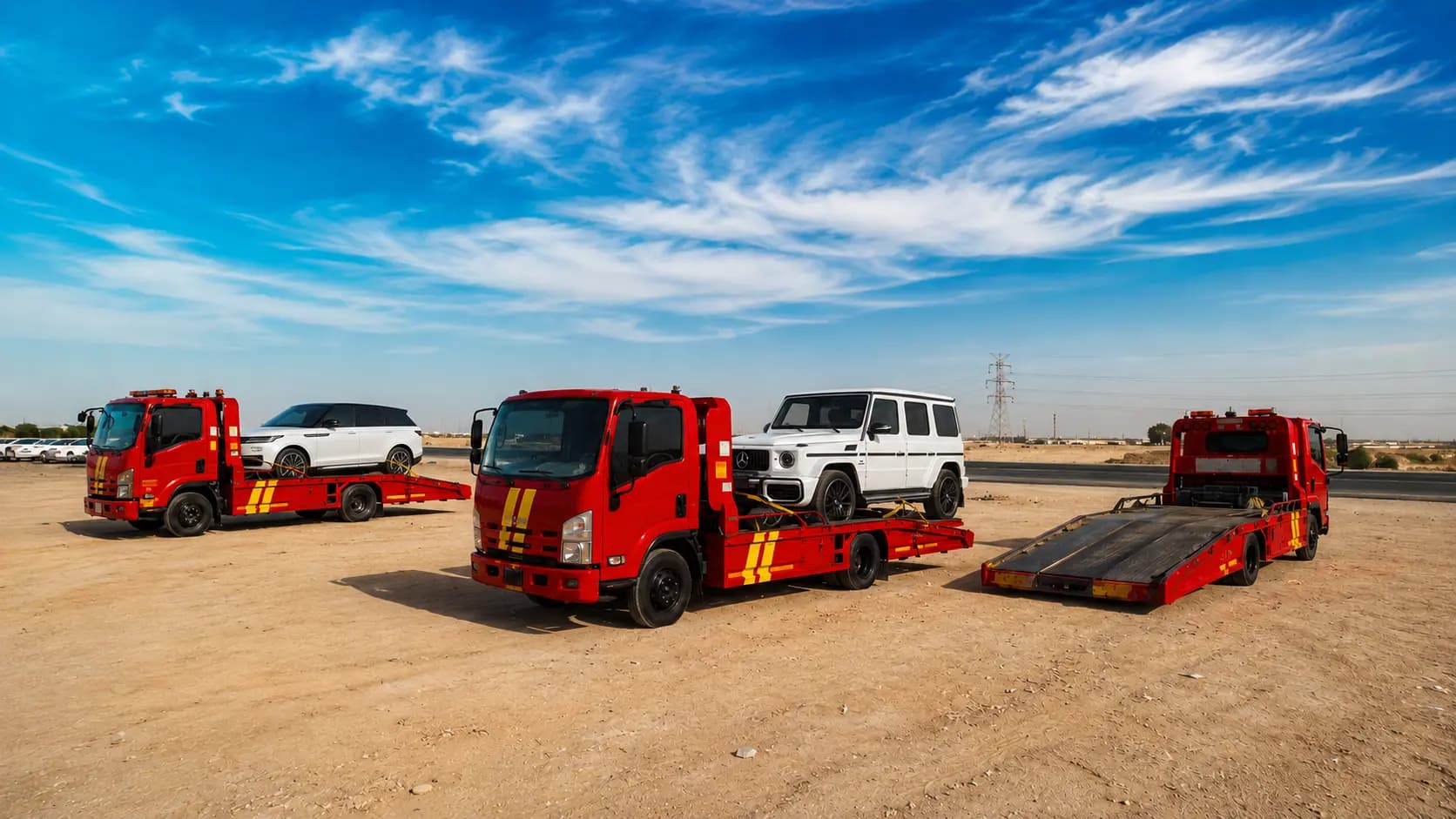

Flatbed towing carries a compatible vehicle on the truck deck. It can reduce road contact during transport, but safe loading still depends on clearance, wheel condition, access, and securement points.
For a safe equipment match, share the vehicle make, model, condition, pickup surface, and clear photos when possible.
When to request this service
- Cars and SUVs within deck dimensions and weight limits
- Low-clearance or non-running vehicles after assessment
- Planned transport where deck loading is appropriate
Equipment and vehicle fit
The operator needs sufficient approach space, a suitable loading angle, rated winching and securement equipment, and safe tie-down points.
How the service works
- Send side and wheel photos if the vehicle is damaged or lowered.
- Remove loose items and disclose modifications.
- Stand clear while the vehicle is winched, positioned, and secured.
Important limits
Extreme low clearance, locked wheels, blocked access, excessive weight, or structural damage may require skates, recovery work, or other equipment.
What affects the price
Trip distance, deck fit, loading angle, disabled wheels, winching, access, waiting time, and destination procedures affect the quote.
Service area
Dispatch is coordinated in Al-Kharj and may be available to nearby areas. Confirm the pickup point, destination, and vehicle details before relying on service.
Frequently asked questions
Is a flatbed suitable for an all-wheel-drive vehicle?
It is often considered, but vehicle-specific guidance and condition still need to be confirmed before dispatch.
Can you load a vehicle with locked wheels?
It may require additional tools and time. Report every locked or damaged wheel before dispatch.
How much loading space is needed?
The required space varies by truck, vehicle, slope, and traffic conditions. Send photos of the pickup area.